

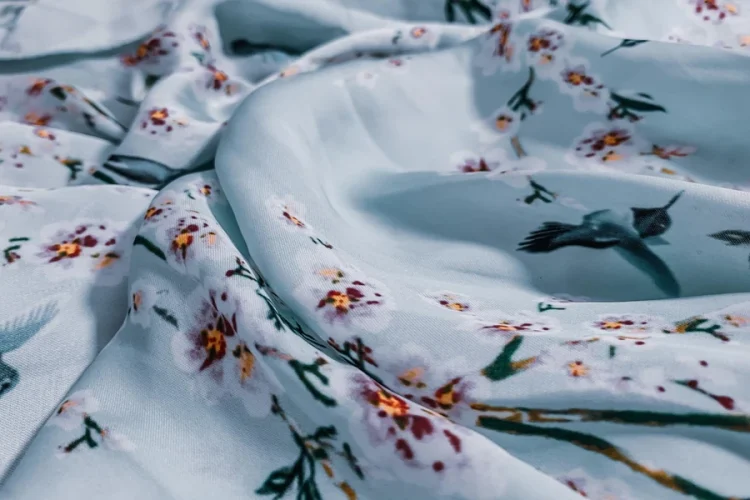
A batik skirt rarely gets worn without someone asking about the pattern. That’s really the point. Long before it became a wardrobe staple, Peranakan batik was a visual language, each motif carrying meaning that had less to do with fashion and more to do with identity, family, and occasion.
Understanding a little of that history tends to change how a piece feels to wear, turning it from a nice print into something with an actual story behind it.
Where Peranakan Batik Actually Comes From
Peranakan batik emerged from the Straits-born Chinese communities of the region, who took the wax-resist dyeing techniques of Javanese batik and reshaped them into something distinctly their own. Colour palettes leaned brighter and more varied than traditional Javanese batik, and motifs began drawing from Chinese symbolism, phoenixes, peonies, butterflies, alongside the florals and fauna already common to the craft. The result wasn’t a copy of an existing tradition; it was a genuinely new one, built at the intersection of two cultures.
This blending is really what makes Peranakan batik distinct from batik traditions elsewhere in the region; it was never meant to belong to just one culture in the first place.
Quick Insights
- Peranakan batik developed from Straits-born Chinese communities blending Chinese motifs into Javanese batik techniques.
- Specific patterns often carry meaning tied to occasion, status, or family tradition, not just decoration.
- Genuine hand-drawn batik differs meaningfully from printed reproductions, both in process and pattern quality.
- Traditional motifs continue to appear in modern pieces, translating heritage into everyday wardrobes.
What the Patterns Are Actually Saying
Certain motifs recur throughout Peranakan batik for reasons rooted in symbolism rather than trend. Phoenixes and peonies often signalled celebration or status, while certain floral repeats were associated with particular family lines or regions. Reading a piece of batik with this in mind changes the experience considerably; a pattern stops being simply decorative and starts being a small piece of cultural memory, still legible generations later to anyone who knows what to look for.
How to Recognise Genuine Peranakan Motifs
A handful of details tend to distinguish authentic Peranakan-influenced batik from a generic floral print, worth knowing whether shopping for heritage pieces or everyday wear:
- Fine, hand-drawn line work, often with slight irregularities that a machine print won’t replicate.
- A colour palette that leans bright and layered, rather than a flat, single-tone background.
- Motifs that combine Chinese symbolism, phoenixes, peonies, with tropical florals and fauna in the same composition.
- Borders and repeats that follow traditional sarong-kebaya proportions, even when adapted into a modern cut.
The Longevity of Batik
Investing in Peranakan batik is often an exercise in conscious consumption. Unlike fast-fashion garments that lose their appeal after a season, a well-made batik skirt or batik cheongsam from a brand like Anmako is crafted to endure. This commitment to quality is deeply rooted in Peranakan culture, where textiles were historically treated as heirlooms.
By choosing pieces that prioritise craftsmanship, you are not only supporting Singapore fashion but also actively participating in the preservation of Nonya heritage. Embracing modern batik wear means valuing the time-honoured techniques of a traditional textile, ensuring that these batik prints continue to be woven into the fabric of our daily lives for years to come.
From Heritage Cloth to Everyday Skirt
Translating this heritage into something wearable day-to-day is really where the craft meets modern life. A well-made batik skirt carries the same motif language as ceremonial pieces, just cut and finished for a modern silhouette, pairing as easily with a plain blouse for the office as it does with a fitted top for an evening out. The pattern does the talking either way, without needing the occasion to be a formal one.
This versatility is really what’s kept the craft alive, rather than confining it to display pieces or special occasions that only come around once a year.
Wearing batik isn’t really about costume or occasion anymore; it’s closer to carrying a small, quiet piece of a much older story into an ordinary Tuesday. The motifs haven’t changed much in generations. What’s changed is how naturally they now sit alongside everything else in a modern wardrobe.
That’s really the quiet appeal of it, a pattern with genuine history, worn without any of the fuss history usually demands.
Curious which motif actually speaks to you? Contact Anmako Singapore and let’s find a batik piece with a story worth wearing.