

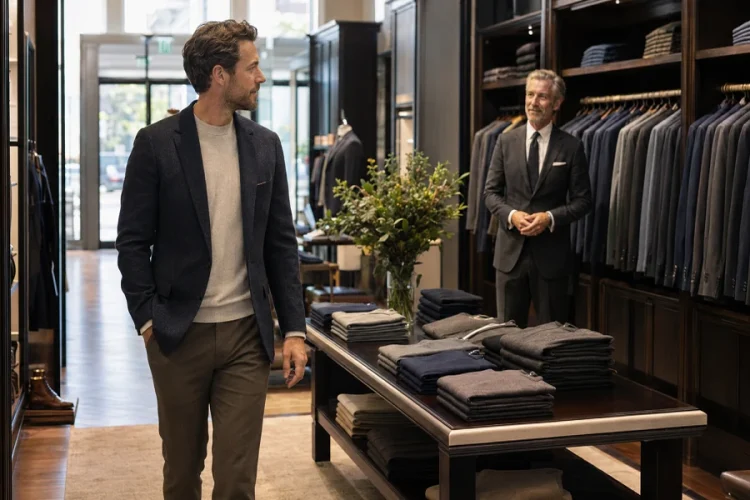
A local suit shop should offer more than racks of jackets and trousers. The strongest stores help each customer choose for a real occasion, compare suitable cuts, understand the total cost, and leave with a balanced fit.
Finding the right shop begins before the fitting room. Research can reveal whether a store offers the selection and supports the occasion requires.
Define the Purpose of the Visit
Start with the event. A job interview, wedding, business presentation, and formal dinner each call for a different balance of color and formality. Set a total budget that includes likely alterations and accessories.
Timing matters too. Shopping well before the event creates room for comparison, fitting, and any follow-up adjustments. A rushed visit can turn a minor sizing issue into a compromise.
Research the Store Before Going
Review the store’s website for its location, hours, product range, fitting options, and contact details. Independent reviews can help, but read several and focus on repeated comments about knowledge, alteration work, and problem resolution.
The Suit Store’s guide for shoppers comparing suit stores near me highlights practical signs such as a broad selection, straightforward pricing, helpful staff, and tailoring support. These points give a buyer a useful checklist before making the trip.
Judge Selection by Relevance, Not Volume
A large inventory helps only when the choices suit the customer. A good store should offer dependable colors, different silhouettes, useful size options, and easy comparison.
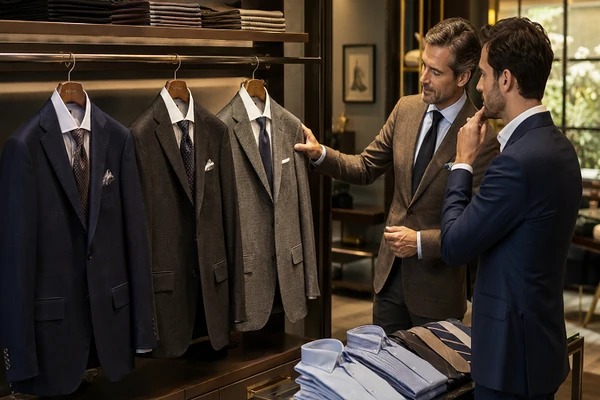
Ask to see two or three suits that fit the occasion and budget. Comparing them side by side makes differences in drape, weight, lapel shape, and comfort easier to notice. Staff should explain those differences without pushing the most expensive option.
Inspect the Garment Closely
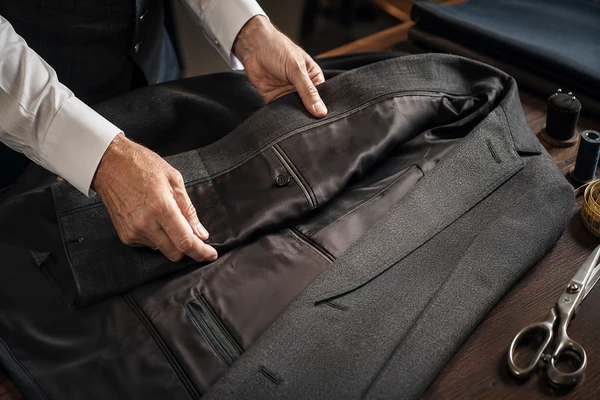
Quality is visible in small details. Check whether the jacket hangs smoothly, patterns align, buttons feel secure, pockets lie flat, and the lining sits without excess bulk. Seams and hems should appear even.
New Mexico State University’s clothing construction standards describe well-made garments as functional, durable, and free from unnecessary bulk. The guide also identifies secure stitching, smooth collars, flat pockets, even hems, and adequate ease as useful quality checkpoints. A knowledgeable consultant should welcome this inspection and answer questions about fabric, construction, and care.
Evaluate the Fitting Support
The first size is a starting point. During the fitting, the consultant should study the shoulders, collar, chest, jacket length, sleeves, trouser waist, seat, and hem. The customer should also sit, walk, reach, and turn.
Ask which adjustments are recommended, who will complete them, how much they will cost, and when the suit will be ready. Clear answers show that fitting is part of the purchase. If a jacket needs major shoulder reconstruction, another cut or size may provide a cleaner foundation.
Notice How the Staff Communicate
Expert service feels calm and specific. A capable adviser asks about the occasion, dress code, budget, preferred fit, and pieces already owned. Recommendations should connect to those answers.
Good staff explains why one color is versatile, why a cut balances the wearer’s build, or why a simple tie works best. The customer should feel informed, not hurried. Pressure and vague answers are reasons to pause.
Confirm the Complete Cost and Store Policies
Before paying, request a clear total covering the suit, alterations, accessories, taxes, and other charges. Confirm the fitting schedule and whether later adjustments require another visit.
Return and exchange terms deserve the same attention. Michigan’s consumer-protection office advises buyers to understand a store’s return policy before purchasing and retain receipts. Ask how altered items, special orders, and sale merchandise are handled because their terms may differ from standard purchases.
Frequently Asked Questions
What should a customer bring to a suit fitting?
Bring the shirt, shoes, and socks planned for the event when possible. An invitation, a dress code note, or a reference photo can also help the consultant understand the required level of formality.
How early should someone shop for an event suit?
Shopping several weeks before the event is sensible. It allows time to compare options, complete alterations, and check the final fit without unnecessary pressure.
Is on-site tailoring important?
It can make the process more convenient and coordinated. What matters most is that the store explains the recommended work, cost, timeline, and responsibility for the final result.
Choose a Store That Earns Confidence
The right local suit shop combines a relevant selection, quality garments, thoughtful fitting, transparent pricing, and respectful guidance. Research first, inspect carefully, ask direct questions, and judge the experience as closely as the suit.
Explore The Suit Store online or visit one of its locations to compare suits, receive fitting guidance, and build a complete look for the next important occasion.